Ouça este conteúdo
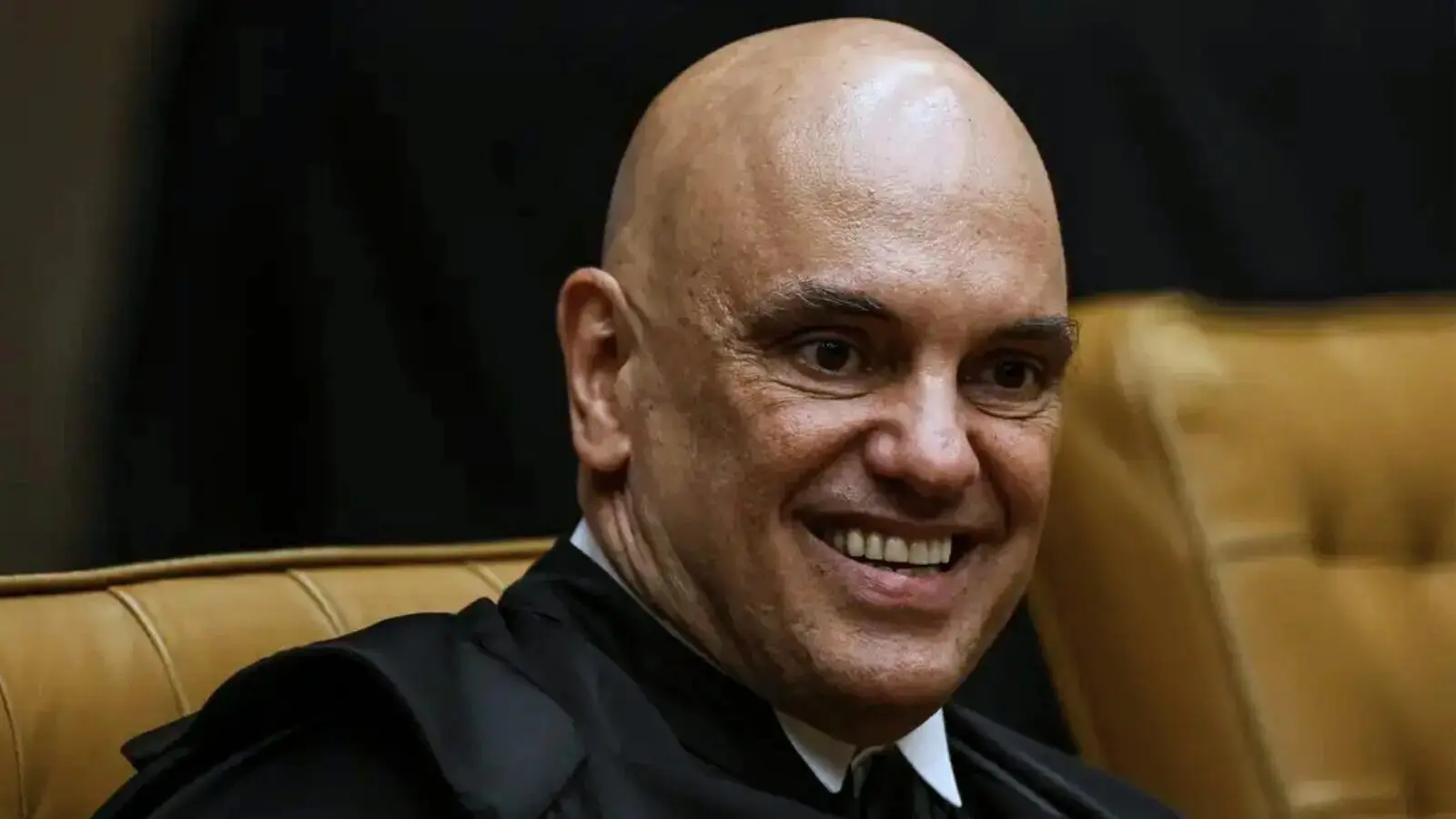
At the most basic level of democracy, investigating, ordering precautionary measures, and judging are separate tasks. In Alexandre de Moraes's Brazil, however, those functions accumulated in the hands of the same Supreme Court justice. And this has been happening for years.
"The concentration of functions transforms the current accusatory model set out in the Constitution and the Code of Criminal Procedure into a purely inquisitorial one," warns jurist Katia Magalhães.
"The judge abandons institutional inertia to assume functions that should belong to the police and the Public Prosecutor's Office, forming judgments incompatible with impartiality," she adds.
Since March 2019, when he accepted the reporting assignment in an inquiry handed to him without a random draw and in which he was at once the rapporteur and the declared victim, Moraes has accumulated decisions that jurists, press organizations, politicians, and even some fellow justices describe as unprecedented in the history of the Supreme Federal Court.
The justice's defenders claim it was all done to protect democracy. Katia does not buy that idea.
"Interpreting is not saying what the rule should be in light of undefined parameters such as 'preservation of the democratic order.' There is no innocent interpretive extrapolation; expansions created by the interpreter are already enough to constitute abuse."
Another pattern identified in Moraes's decisions is the targeting of third parties with no direct connection to the proceedings: users fined for using VPNs, companies whose accounts were blocked to pay the debts of others, even teenagers with their profiles taken down.
"The imposition of sanctions on third parties is a frontal violation of the principle of individual criminal responsibility, protected as a constitutional guarantee and an entrenched clause," the jurist says.
And what about institutional checks? The Senate has 43 requests for impeachment sitting idle, but none has been acted on. For Katia Magalhães, that is a choice, not a limitation: "The Senate could stand out as the main check, both by opening impeachment proceedings against abusive justices, without needing the approval of the chamber's president, and by carefully selecting candidates for positions at the top of the Judiciary."
Based on this record, Gazeta do Povo's reporting mapped 104 cases of abuses attributed to Alexandre Moraes. Below, case by case, see the reach and impact of those decisions.
The endless inquiry
1. Continuing to run an inquiry in which he considers himself the victim
Case: INQ 4781
Date: March 14, 2019 — still in effect
The so-called Fake News Inquiry was opened by the then president of the STF, Dias Toffoli, and handed to Alexandre de Moraes without a random draw - by direct choice. From the outset, Moraes occupied an unusual position: besides running the case, he was also one of the targets of the alleged offenses under investigation, since the inquiry concerns attacks on justices of the court, including himself. Even so, he did not recuse himself or ask for the case to be reassigned. In practice, it is as if an investigation were being conducted by the very person who considers himself the victim.
2. Censorship of Crusoé magazine and the website O Antagonista
Case: INQ 4781
Date: April 2019
Moraes ordered Crusoé magazine and the website O Antagonista to take down the report "My Father's Friend's Friend," which linked the then-president of the STF, Dias Toffoli, to Lava Jato documents involving Odebrecht. The Brazilian Bar Association, journalists' organizations, and justices of the court itself classified the order as prior censorship - expressly forbidden by Article 220 of the Constitution. Moraes revoked the decision five days later.
3. Investigation into the financing of false news
Case: INQ 4781, INQ 4828, INQ 4879, INQ 4888 and INQ 4874
Date: 2019-2022-2023
The justice expanded the original inquiry and opened several lines of investigation to examine the alleged financing of disinformation networks. Over time, the focus ceased to be only threats against justices and came to include digital campaigns, also reaching lawmakers and businesspeople. This expansion, without clear limits, distorts the object of the investigation and departs from the standard expected in criminal investigations, which should have a well-defined focus.
4. Order for Telegram to publish a forced retraction
Case: INQ 4781
Date: May 10, 2023
Alexandre de Moraes gave Telegram only one hour to delete messages sent to all Brazilian users criticizing PL 2630 (a bill proposing rules to combat disinformation on social networks) and replace them with a notice stating that the previous content was "blatant and unlawful disinformation." In the event of noncompliance, he set a fine of R$ 500,000 per hour, in addition to the possibility of suspending the app for 72 hours. Forcing a company to publish that kind of retraction, on a mass scale, amounts to imposing an official version before any final ruling - which, in practice, is seen as prior censorship.
5. Removal of ads by Google, Meta, Spotify, and Brasil Paralelo
Case: INQ 4781
Date: May 2023
Moraes ordered Google, Meta, Spotify, and Brasil Paralelo to remove, within one hour, all ads and texts calling PL 2630 the "Censorship Bill." If they failed to comply, the fine would be R$ 150,000 per hour for each piece of content kept online. The measure ended up punishing companies for publicly taking a position on a bill that was still under discussion in Congress.
6. Tax auditor investigated for criticism of the STF
Case: INQ 4781
Date: March 2026
A Federal Revenue auditor was summoned to testify as a target of investigation after posting criticism of the STF on social media. The episode became a symbol of how far the inquiry had expanded: public servants with no connection to the original targets began to be included solely because of opinions posted online.
7. Silas Malafaia becomes a defendant over public statements
Case: INQ 4781
Date: March 2026
Pastor Silas Malafaia began answering as a defendant in the inquiry for statements deemed offensive toward Army generals. This raises doubts about whether the STF should judge a case involving people without privileged forum status and shows that the inquiry began advancing into conflicts with no direct relation to the court's justices.
Daniel Silveira
8. Arrest of a congressman before approval by the Chamber
Case: INQ 4781
Date: February 16, 2021
Federal congressman Daniel Silveira was arrested after publishing a video attacking STF justices. The detention occurred before any deliberation by the Chamber of Deputies, which only confirmed the measure the next day, reversing the logic of parliamentary protection provided for in the Constitution.
9. Conviction even without a request from the Public Prosecutor's Office
Case: Action derived from INQ 4781
Date: April 2022
Alexandre de Moraes sentenced Silveira to more than eight years in prison in a proceeding in which he acted as rapporteur, investigator, and judge - accumulating functions that violate the accusatory system. The sentence imposed exceeded even the expectations of the Office of the Prosecutor-General, which had sought conviction for crimes carrying less severe penalties.
10. Presidential pardon struck down by the STF
Case: Action derived from INQ 4781
Date: 2022
The STF annulled the pardon granted by Jair Bolsonaro to Silveira, in practice limiting the scope of a traditional prerogative of the president of the Republic.
Roberto Jefferson
11. Arrest despite opposition from the Public Prosecutor's Office
Case: INQ 4874
Date: August 2021
Former congressman Roberto Jefferson was arrested for social media posts considered radical, even though the Office of the Prosecutor-General had opposed the measure. Even so, the arrest was ordered.
12. New arrest after house arrest was revoked
Case: PET 9844
Date: October 2022
Jefferson was under house arrest for health reasons when Moraes revoked the benefit and ordered a new detention. The episode ended in an armed confrontation with the Federal Police. Even so, questions remained about the first arrest, decreed solely over posts, without violence.
Anderson Torres and Ibaneis Rocha
13. Governor removed from office
Case: INQ 4879
Date: January 8, 2023
Ibaneis Rocha, governor of the Federal District, was removed from office right after the January 8 acts. Two years later, Moraes himself shelved the case for lack of evidence. The contradiction raised questions: if there were no indications, why remove him?
14. Arrest of Anderson Torres without prior statement from the PGR
Case: INQ 4923
Date: January 10, 2023
Anderson Torres, Bolsonaro's former justice minister and then the Federal District's public security secretary, was arrested immediately after the acts. Months later, the inquiry against Ibaneis was shelved for lack of evidence, which weakened the original justification for the arrest.
Mauro Cid
15. Arrest in an entirely sealed proceeding
Case: PET 10405 (sealed)
Date: 2023
Mauro Cid was arrested and later released in a secret proceeding. Because the case is under seal, it is not possible to know clearly the reasons for each decision.
16. Plea deal with a light sentence
Case: PET 10405 and derivatives
Date: 2024–2025
After entering into a plea deal, Cid received a light sentence. The defense challenged the calculation of the sentence, arguing that he had already spent more time under restrictions than the sentence itself.
January 8: mass arrests and measures
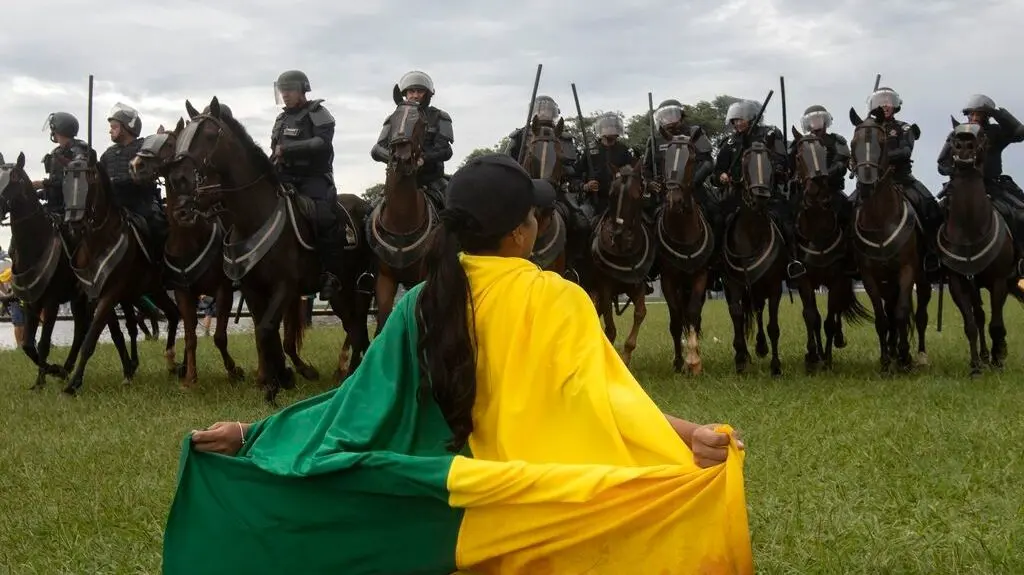
17. Buses seized without individual proceedings
Case: INQ 4921
Date: January 8, 2023
All the buses that brought protesters to Brasilia were seized, even without a specific investigation against the companies.
18. Mass arrests without individual analysis
Case: INQ 4921 and derivatives
Date: January 2023
More than 900 people were kept in prison under generic decisions, without a detailed analysis of what each one had done.
19. Arrest of the former commander of the Federal District Military Police
Case: INQ 4923
Date: January 10, 2023
Fabio Augusto Vieira was arrested on accusations of omission. Two justices disagreed, saying there was no proof of criminal intent.
20. Death of a detainee who was awaiting a release decision
Case: AP 1542 and related proceedings
Date: 2023
Cleriston Pereira da Cunha, known as "Clezão," died in prison after spending about 80 days detained even after the Office of the Prosecutor-General recommended his release. The request was not analyzed during that period.
21. Businesspeople investigated for political support
Case: INQ 4874 and related proceedings
Date: 2023
Businesspeople began to be investigated as possible supporters of a coup, with secrecy protections lifted and searches carried out.
22. Lawyers removed during trial
Case: AP 2693
Date: October 2025
During a trial, the lawyers for Filipe Martins, a former adviser to Jair Bolsonaro, were removed from the defense in the middle of the session. This directly interfered with the defendant's right to a defense.
23. Ban on encampments at Praça dos Três Poderes
Case: INQ 4871
Date: 2025
Moraes banned protesters' encampments in the Praça dos Três Poderes area in Brasilia. The measure restricted a place historically used for political demonstrations, and it came after Congressman Hélio Lopes (PL-RJ) tried to hold a silent protest in front of the STF.
The trial of Jair Bolsonaro
24. Accumulation of functions in the same proceeding
Case: various
Date: 2019–2026
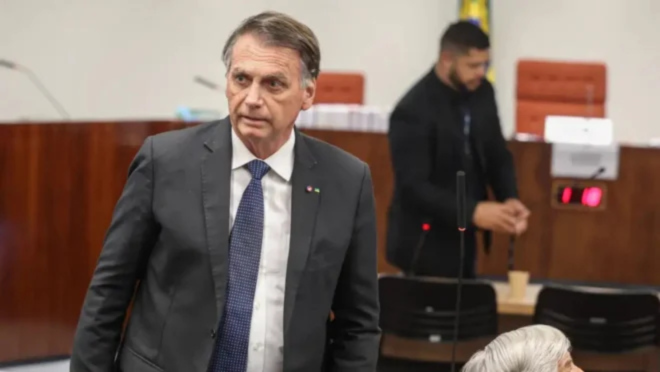
Alexandre de Moraes acted as rapporteur, as the justice responsible for investigations, and also as judge in cases related to the same facts.
25. TSE and STF acting on the same investigated parties
Case: AIJE 0600814-85.2022.6.00.0000; AIJE 0601002-78.2022.6.00.0000; INQ 4781 (STF); PET 10.543 (STF)
Date: August 2021 – October 2023
Cases involving Jair Bolsonaro moved forward at the same time in the TSE and the STF, with Alexandre de Moraes directly involved on both fronts. At the TSE, already under his presidency beginning in August 2022, actions such as the one dealing with the meeting with ambassadors in July of that year, and another about the September 7 acts, were analyzed during and after the election. At the same time, in the STF, Moraes was conducting the Fake News Inquiry, which investigated the same facts and people. In one of those proceedings, the TSE itself asked the STF to send evidence that was under Moraes's reporting assignment, concentrating different stages of the same case in the same justice.
26. Judge also as a possible victim
Case: AIMP 165
Date: 2024
Bolsonaro's defense asked for Moraes to be removed because he was a target of the alleged plot under investigation. The request was denied.
27. Ban on visits by family members
Case: EP 169
Date: March 2026
The justice prohibited Bolsonaro's children from visiting him while he was under house arrest, a decision the defense considered excessive.
Blocking of digital platforms
28. Cutting off a channel's revenue without a conviction
Case: INQ 4828
Date: 2021–2022
Moraes ordered the cutting off of the revenue sources (such as ads and subscriptions) of the right-wing channel Terça Livre before any conviction. The measure directly affected the project's livelihood without a final court ruling.
29. Blocking Telegram throughout the country
Case: PET 9935
Date: March 17, 2022
Telegram was suspended throughout Brazil for failing to comply with court orders. The decision lasted less than a day, but it affected millions of users who had no connection to the case.
30. Investigation against technology executives
Case: INQ 4933
Date: 2023
Executives from Google and Telegram came under investigation after criticizing PL 2630, placing companies under investigation for taking a position in a public debate.
31. Blocking donations and online funding
Case: INQ 4781 and related proceedings
Date: 2021–2023
Profiles under investigation had their fundraising mechanisms suspended, even without a formal charge. Many were left without income and unable to defend themselves immediately.
32. Total suspension of X (Twitter) in Brazil
Case: PET 12404
Date: August 30, 2024
Claiming noncompliance with court orders, Moraes ordered the complete suspension of the platform in the country. More than 21 million ordinary users were affected. The network was unblocked only on October 8.
33. Blocking Starlink's accounts over another company's debt
Case: PET 12404
Date: August 2024
Accounts belonging to Starlink, a company owned by American billionaire Elon Musk, were blocked to guarantee payment of X's fines, even though the companies are distinct. The measure hit a company that was not part of the proceeding.
34. Fine for ordinary users for using a VPN
Case: PET 12404
Date: August 2024
The decision provided for a daily fine for anyone who used a VPN to access X. The punishment affected users with no connection to the proceeding.
35. Opening an inquiry to investigate Elon Musk
Case: INQ 4957
Date: 2024
Elon Musk became the target of an investigation after refusing to comply with court orders. The measure increased pressure on the company.
36. Suspension of Rumble in Brazil
Case: PET 9935
Date: February 2025
The video platform was blocked for failing to comply with court decisions, repeating the model used with Telegram.
37. Proposal for a permanent body against "disinformation"
Case: RE 1.037.396 and RE 1.057.258
Date: June 2025
Alexandre de Moraes supported the creation of a digital content monitoring structure with participation by the state and private companies, institutionalizing a control model that opens the door to censorship.
38. Sealed decisions revealed by a U.S. commission
Case: various
Date: 2024–2026
Reports from the U.S. Congress disclosed dozens of secret decisions involving content blocks and user data. The STF said they were all legal and well grounded.
39. Orders to collect the data of Brazilians abroad
Case: sealed proceedings
Date: 2025–2026
Companies were compelled to hand over data on Brazilian users, including those living outside the country, extending STF decisions beyond national territory.
Journalists, critics, and activists
40. Arrest of an activist for demonstrations
Case: INQ 4781
Date: 2020
Right-wing activist Sara Winter was arrested over acts and publications linked to protests against the STF.
41. Arrests and flight of a journalist
Case: INQ 4781
Date: 2020–2022
Journalist Oswaldo Eustáquio was arrested and later left the country, alleging persecution.
42. Blocking of a left-wing party
Case: PET 10.391
Date: June 2022
Profiles belonging to the Workers' Cause Party (PCO) were taken down after criticism of the STF, in a rare case of a measure against the left.
43. Blocking André Valadão's profiles
Case: PET 10.648
Date: December 2022
Pastor André Valadão, leader of Lagoinha Baptist Church and a supporter of Jair Bolsonaro, had his social media profiles blocked by Moraes's order. The content was predominantly religious, with no direct relation to the facts under investigation, which exposed the breadth of the criteria used to include targets in the inquiry.
44. Censorship of Valadão's posts
Case: PET 10.648
Date: December 2022
After having his profiles blocked, Pastor André Valadão was also targeted by a new order requiring the removal of specific posts. The sequence - first the general block, then the removal of specific content - showed how the decisions could advance in stages within the same proceeding.
45. Blocking the profiles of influencer Bárbara Destefani
Case: INQ 4879
Date: January 2023
Bárbara had her social media accounts suspended. She was not directly linked to the acts of vandalism under investigation, but she ended up included in the measures taken during that period.
46. Cancellation of Rodrigo Constantino's passport and blocking of his accounts
Case: INQ 4781
Date: January 2023
The journalist, who lives in the United States, had his passport canceled, his bank accounts blocked, and his profiles removed. Because the proceeding was under seal, he only learned of the measures when he tried to use the document to travel. Later, messages surfaced indicating that the orders may have been issued before a formal investigative report.
47. Cancellation of Paulo Figueiredo's passport and blocking of his accounts
Case: INQ 4781
Date: January 2023
The journalist faced similar measures: passport canceled, accounts blocked, and profiles removed. Everything occurred within a sealed proceeding, and the defense spent months without full access to the reasons for the decisions.
48. Blocking journalist Guilherme Fiuza's profiles
Case: INQ 4781
Date: January 2023
Fiuza had his social media accounts blocked. Internal messages from Moraes's chambers indicated that the order to "block everything" may have been given even before a report on the case was formally completed.
49. Suspension of OAC Brasil's activities
Case: PET 10.981
Date: February 2023
A single decision imposed three measures at the same time against the Order of Conservative Lawyers of Brazil: suspension of activities, blocking of social media, and removal of the website from the air. The entity had not previously been under investigation, which shows the broad reach of the measure.
50. Censorship of PCO posts
Case: PET 10.391
Date: February 2023
After having its profiles blocked, the Workers' Cause Party was also ordered to remove specific posts. The appeals filed failed to reverse the decision.
51. Blocking the profiles of prosecutor Marcelo Rocha Monteiro
Case: INQ 4781
Date: November 2023
Rocha Monteiro had his accounts blocked. A critic of STF decisions on public security in Rio de Janeiro, he was hit by a measure that, in practice, represses that kind of stance.
52. Blocking the profiles of singer Davi Sacer
Case: INQ 4781
Date: November 2023
The gospel music artist had his profiles suspended. The measure affected a public figure with no direct political activity, extending the reach of the decisions beyond the political field.
53. Blocking the profiles of Oswaldo Eustáquio's daughter
Case: INQ 4781 Date: August 2024
The journalist's teenage daughter had her social media accounts blocked. The decision affected a minor who was not under investigation.
54. Request for the extradition of Oswaldo Eustáquio
Case: INQ 4781
Date: 2024
Moraes requested the extradition of Eustáquio, who was in Spain after applying for asylum. The request was not accepted by the Spanish authorities.
55. Blocking the profiles of Rádio RCN
Case: INQ 4954
Date: January 2023
The broadcaster from Aracaju, in the state of Sergipe, had its social media profiles blocked. The case extended the reach of the decisions to traditional media outlets.
56. Calling in the Federal Police after an insult in Rome
Case: INQ 4940
Date: 2024
After being approached and insulted by a Brazilian in Rome, Moraes called in the Federal Police. He used the state apparatus in response to a personal conflict that occurred abroad, without the involvement of any serious crime. The "victim," once again, was Moraes himself.
Lawmakers: restrictions and investigations
57. Blocking the profiles of Congressman Otoni de Paula
Case: INQ 4879
Date: August 2022
Otoni de Paula had his accounts suspended for allegedly attacking institutions, even though he was a federal congressman (which guarantees him immunity for any words he says).
58. Blocking the profiles of Congressman Zucco
Case: PET 10.685
Date: December 2022
Zucco had his social media profiles blocked by Moraes's decision. The defense argued that, as a lawmaker, he had the right to express opinions without suffering that kind of restriction. The argument was not accepted.
59. Blocking the profiles of state representative Homero Marchese
Case: INQ 4781
Date: November 2022
Paraná state representative Homero Marchese had his social media accounts blocked. The measure reached a political figure without STF jurisdiction, extending the reach of the inquiry beyond its traditional competence.
60. List of lawmakers informally investigated
Case: various
Date: 2022–2023
Internal messages indicated that advisers connected to Alexandre de Moraes's chambers monitored lawmakers' profiles without the formal opening of an investigation. The guidance described in the conversations was to gather content, block accounts, and only afterward hear those involved.
61. Blocking the profiles of Congressman Alan Rick
Case: INQ 4879 Date: January 2023
Rick also had his social media accounts suspended. As in other cases, the defense invoked the protection afforded to lawmakers for their statements, but the measure was maintained.
62. Blocking the profiles of Congressman Nikolas Ferreira
Case: INQ 4879
Date: January 2023
Nikolas had his profiles blocked shortly after the January 8 acts. The decision was later revised, but it directly affected a newly elected lawmaker and one of the most voted-for politicians in the country.
63. Blocking the profiles of Senator Marcos do Val
Case: PET 10.975
Date: June 2023
The senator had his social media accounts suspended, even after cooperating with investigations by the STF itself.
64. Actions in the Carla Zambelli case
Case: PET 0601843-73.2022.6.00.0000 (TSE); AIJE (TRE-SP); AP 2.428 (STF) Date: November 2022 – December 2025
The Carla Zambelli case went through three different levels of jurisdiction. In 2022, already during Alexandre de Moraes's tenure at the head of the TSE, the court ordered the takedown of profiles linked to the congresswoman on social media, in an action based on a report from the court's internal anti-disinformation unit. Months later, the court itself restored access to the accounts, keeping only the restriction on content deemed irregular. The loss of her seat came in January 2025 by decision of the São Paulo regional electoral court. At the end of the year, the Chamber of Deputies tried to block the loss of her mandate, but the decision was annulled in the STF by Moraes on December 11, 2025, and confirmed by the First Panel the following day.
65. Measures against Bolsonaro for acts by his son
Case: INQ 4995
Date: July 2025
Former president Jair Bolsonaro was targeted by precautionary measures related, in part, to actions by his son, Congressman Eduardo Bolsonaro. The decision linked responsibilities between legally independent persons.
Interference in the Executive Branch
66. Orders against Eduardo Bolsonaro cited by a U.S. commission
Case: sealed proceedings
Date: 2025
A report by a U.S. House committee stated that Eduardo Bolsonaro was targeted by Brazilian court orders that included data collection and content restrictions even while he was outside the country. The document classified those measures as international in scope.
67. Suspension of Alexandre Ramagem's appointment to the Federal Police
Case: MS 37.097
Date: April 2020
Hours before the swearing-in, Moraes suspended the appointment of Alexandre Ramagem to head the Federal Police. The decision blocked a direct act by then-president Jair Bolsonaro.
68. Suspension of decrees on firearms
Case: ADIs 6.134 and 6.675
Date: 2021–2022 Federal government decrees that expanded access to firearms were suspended by Moraes's decision. This directly interfered with a public policy defined by the Executive Branch.
69. R$ 22.9 million fine against Bolsonaro's coalition
Case: Civil Petition 241 - TSE
Date: November 2022
As president of the TSE, Moraes imposed a multimillion-real fine on Jair Bolsonaro's campaign after it questioned the electronic voting machines. The decision came only hours after the request.
The "parallel office"
70. Informal reports produced via WhatsApp
Case: INQ 4781 and others
Date: 2022–2023
Messages revealed by the press showed that advisers in Alexandre de Moraes's chambers requested and received reports on profiles and social media content through informal WhatsApp conversations. Part of that material was produced by Eduardo Tagliaferro, who at the time was linked to the TSE's anti-disinformation unit. According to the messages, the requests came directly from the chambers and did not follow an official procedure. Once ready, the reports were incorporated into the proceedings as if they were formal technical analyses. In internal conversations, Tagliaferro himself expressed concern about the procedure and the fact that the requests were being made outside institutional channels.
71. Idea to hide the origin of requests from the chambers
Case: internal conversations
Date: 2022
In the same messages, Moraes's team discussed creating an anonymous email address to formalize requests from the chambers so they would look like outside complaints rather than internal orders.
72. Operation against businesspeople with a report produced afterward
Case: PET 10.543 Date: August 2022
An operation against businesspeople was carried out before a complete formal report had been prepared; it was finished only after the action. In other words, the decision came before the official justification.
73. Guidance to "find something" against Eduardo Bolsonaro
Case: internal conversations
Date: 2022
Messages indicated that advisers sought to link Eduardo Bolsonaro to other investigated parties, starting from the hypothesis before the evidence. The chambers deny any irregularity.
74. Alignment between the chambers and the PGR
Case: various
Date: September 2025
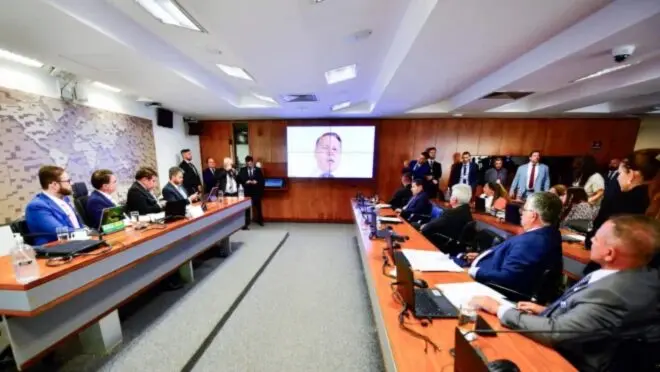
In testimony, Moraes's former adviser Eduardo Tagliaferro said there had been prior coordination between Moraes's chambers and members of the Prosecutor's Office regarding targets of investigation. The accusations were denied.
75. Indictment of a former adviser after allegations
Case: INQ 4972
Date: 2024–2025
After reporting alleged irregularities, Tagliaferro was investigated and charged. He became the target of proceedings and left the country.
76. Arrest of comedian Bismark Fugazza
Case: sealed
Date: 2022
Fugazza was arrested for days after publishing content considered critical. Because the case is under seal, the full details of the decision are not public.
77. Arrest of Filipe Martins amid inconsistencies
Case: AP 2693 Date: 2023
Filipe Martins's defense pointed to errors in documents used to justify his arrest, such as incorrect data and questionable references.
78. Sealed investigation of Judge Ludmila Grilo
Case: sealed
Date: 2022
Judge Ludmila Lins Grilo, known for her criticism of the STF, was investigated and ended up leaving the country. The proceeding remains under seal, without full public details.
79. Arrest of military personnel for online activity
Case: PET 12.100
Date: 2024
Military personnel were arrested based on social media activity related to the investigation into an attempted coup. Part of the proceeding is under seal.
Electoral censorship at the TSE
80. Censorship of press outlets during the elections
Case: TSE Resolution No. 23.714/2022; RPs 06001386-41, 0601325-83, 0600557-60
Date: October 2022
During the 2022 campaign, already under Alexandre de Moraes's presidency at the TSE, court decisions ordered the removal of content published by press outlets. On October 1, the website O Antagonista was forced to remove a report about an audio recording attributed to Marcola, the leader of the PCC, that mentioned support for Lula - and it ended up being fined when it republished the material. During the same period, Jovem Pan had an interview with then-senator Mara Gabrilli taken off the air after it mentioned the Celso Daniel case. Content linking Bolsonaro to cannibalism and Lula to drug trafficking was also targeted by decisions. The orders came through individual rulings during the election, based on rules edited on the eve of the runoff.
81. Blocking a Brasil Paralelo documentary
Case: AIJE 0601522-38.2022.6.00.0000 - TSE
Date: October 2022
A documentary by the conservative producer Brasil Paralelo, with content critical of the electoral process, was blocked before its release - which constitutes prior censorship.
82. Political content monitoring structure
Case: TSE Ordinance No. 510/2021; TSE Resolution No. 23.683/2022
Date: August 2021 – 2023
In March 2022, the TSE created the Special Advisory for Combating Disinformation (AEED), linked to a program aimed at fighting disinformation that had been instituted the previous year. The body began to monitor social media and produce reports on political content during the elections. Those documents served as the basis for court decisions, including the removal of posts and profiles. With Moraes at the head of the TSE, the structure gained greater prominence and came to directly feed the court's decisions. It was not clear, however, what criteria were being used to monitor and classify that content.
83. Fines and removals without clear criteria
Case: TSE Resolution No. 23.714/2022; ADI 7261 (STF)
Date: October 20, 2022
On the eve of the runoff, already under Alexandre de Moraes's presidency, the TSE issued a resolution prohibiting the dissemination of content considered "knowingly untrue or gravely decontextualized," without objectively defining what that meant. The same rule authorized the immediate removal of that content and established fines that could reach R$ 100,000 per hour in case of noncompliance. The rule was challenged by the Office of the Prosecutor-General before the STF on the grounds that it violated freedom of expression, but it was ultimately upheld by a majority of the justices.
84. Removal of a critical video and a fine
Case: 0600543-76.2022.6.00.0000 - TSE
Date: July 2022
The court ordered the removal of a video linking Lula and the PT to the PCC on the grounds that the content spread false information without proof. The decision also imposed a fine on anyone who circulated the video without complying with the order, directly affecting the circulation of political content during the campaign.
85. Orders to streaming services, TV, and video platforms
Case: Representation (TSE); RPs 06001386-41, 0601325-83, 0600557-60
Date: October 2022
On the eve of the 2022 runoff, when Alexandre de Moraes presided over the TSE, the court's decisions began to affect not only social networks but also content distributed by video and streaming. One of the most emblematic cases was the removal of the documentary Who Ordered Jair Bolsonaro Killed?, by Brasil Paralelo, which was barred from being shown on any medium until after the election by decision of electoral inspector Benedito Gonçalves, confirmed by the other justices at the request of Lula's campaign. During the same period, the court's decisions also hit Jovem Pan's programming, with the removal of interviews and political commentary aired on radio, TV, and YouTube. The orders extended the reach of the decisions beyond traditional social networks, also reaching video services and audiovisual distribution
86. Mass removals of content
Case: TSE Resolution No. 23.714/2022
Date: October 2022
During the runoff, with the TSE presided over by Alexandre de Moraes, the court began to gather multiple publications into a single decision and order their removal in one block. In one ruling, 58 posts deemed problematic were identified, with an order to remove the 25 most serious ones. The contents were spread across different profiles and platforms, but they were targeted by a single decision with a short compliance deadline.
87. Short deadlines and blocks across multiple platforms
Case: TSE Resolution No. 23.714/2022; PET 10.802 (STF)
Date: October 2022 – January 2024
Still under Alexandre de Moraes's presidency at the TSE, the decisions began imposing short deadlines for taking down content, generally up to two hours - and they could fall to one hour in the days closest to the election. Noncompliance generated hourly fines. In later cases, such as the blocking of commentator Paulo Figueiredo's profiles, court orders hit several platforms at once, including Twitter, Instagram, TikTok, Telegram, and Rumble, broadening the reach and speed of the measures.
88. Blocking a news website
Case: 0602041-13.2022.6.00.0000 - TSE
Date: December 2022
Besides removing content considered critical of Moraes, one decision ordered the blocking of the domain of the website Duna Press, affecting the outlet's entire publishing structure.
The Monark case
89. Removal of the YouTube channel
Case: Civil Petition 241
Date: November 1, 2022
Moraes ordered the removal of YouTuber Bruno "Monark" Aiub's channel even before any criminal charge. The defense classified it as prior censorship, since the space was blocked over future content, not judged acts.
90. Blocking profiles on social media
Case: INQ 4879
Date: January 11, 2023
After the January 8 acts, Moraes ordered the removal of Monark's profiles on all networks. The defense argued that he had not taken part in the vandalism and that the measure punished opinions, not crimes.
91. Fine, blocking of accounts, and suspension of monetization
Case: INQ 4923
Date: June 13, 2023
Moraes imposed a R$ 300,000 fine, blocked bank accounts, and suspended monetization after Monark created new profiles. The defense argued that creating profiles is freedom of expression and that opinions are not crimes.
92. STF upholds the blocks
Case: INQ 4923
Date: September 2024
Platforms X and Discord appealed, but Moraes rejected the appeals and the STF's First Panel unanimously upheld the decision. Monark had about 40 accounts blocked across 24 platforms, according to a survey by the U.S. House Judiciary Committee.
Direct action in public policy
93. Autonomy of states during the pandemic
Case: ADPF 672
Date: 2020
Moraes ensured that states and municipalities could adopt their own measures against the pandemic, even against the guidance of Jair Bolsonaro's government.
94. Obligation to keep Covid-19 data available
Case: ADPF 690
Date: 2020
Bolsonaro's government was required to keep fully disclosing pandemic data after announcing changes in how that information would be released.
95. Suspension of IPI tax reduction
Case: ADIs 7.153 and 7.155
Date: 2022
Decrees that reduced taxes were partially suspended to protect the industry in the Manaus Free Trade Zone. It was a direct interference in the Union's fiscal policy.
96. Nursing pay floor with rules altered by the STF
Case: ADI 7.222
Date: 2022–2023
The STF first suspended the national nursing pay floor approved by Congress for lack of a definition of how it would be funded. It later allowed implementation with changes: in the private sector, the amount came to depend on negotiation between employers and workers and could vary by region. Moraes followed that line. In practice, the decision changed a law that had already been approved by allowing the amount to cease being national and to vary according to local agreements.
97. Ban on removing homeless people
Case: ADPF 976
Date: 2023
Moraes prohibited the forced removal of homeless people and ordered the government to draw up a national plan on the subject. The decision meant that a single justice immediately set rules for the entire country on an urban policy issue - something that, in theory, should belong to elected governments and legislators.
98. Vote to decriminalize marijuana
Case: RE 635.659
Date: 2023
Alexandre de Moraes voted in favor of decriminalizing possession of marijuana for personal use, proposing objective quantity criteria. The decision amounted to an invasion of Congress's authority in an area already defined by law. The judgment was not concluded.
99. Suspension of a Federal Medical Council rule on abortion
Case: ADPF 1141
Date: 2024
A resolution of the Federal Medical Council was suspended, allowing procedures that had been restricted by the rule. Jurists pointed out that Moraes interfered with the autonomy of a professional council and moved ahead of the STF itself by deciding alone on a subject that had not yet been definitively judged by the court.
100. Enforcement of fines for highway blockades
Case: ADPF 519
Date: 2025
Fines against truck drivers for road blockades after the elections were enforced based on an old action used in a new context.
101. Intervention in a civil service exam with an accommodation for a candidate with dwarfism
Case: RCL 91.550
Date: 2026
The justice ordered that a candidate with dwarfism retake a physical test with an accommodation after having been eliminated from a public exam. The STF went beyond what normally falls to the court by interfering directly in a state-level examination.
102. Action in the Favelas ADPF after a police operation
Case: ADPF 635
Date: 2025
After a police operation with more than 120 dead in Rio, Moraes temporarily took over the case and ordered evidence to be preserved while demanding explanations from the authorities. The ADPF is an action used in the STF to challenge acts of public authorities that may violate the Constitution. The episode revived the debate over how far the court had been directly interfering in the way the police operate in the state.
IOF: when Moraes overrode Congress
103. Suspension of Congress's decree
Case: ADIs 7839 and 7827, ADC 96ib
Date: July 2025
In May 2025, Lula increased the Tax on Financial Transactions (IOF) for credit, foreign exchange, and insurance. Congress overturned the decree with 383 votes in the Chamber and unanimity in the Senate. Moraes, acting alone, suspended the Legislature's decision and validated most of the presidential decree. In short: a single justice reversed a decision made by 594 elected lawmakers.
104. Justice ignores the impasse and decides
Case: ADIs 7839 and 7827, ADC 96
Date: July 16, 2025
One day before validating the decree on the IOF, Moraes presided over a conciliation hearing between the Executive and Legislative branches that ended without an agreement. The next day, he decided alone in favor of the government. The person who mediated the negotiation also decided the case.