Ouça este conteúdo
(This is an English version of the text originally published by Gazeta do Povo on Wednesday, August 20th 2025)
Since Alexandre de Moraes was included in the Magnitsky Act, the United States Department of State has warned, at least twice, that other justices of Brazil’s Federal Supreme Court (STF) could also face sanctions if they support or facilitate their colleague's conduct.
Moraes is blocked from the international financial system because, in the view of the US Treasury, he persecuted political opponents of the Lula government — especially former president Jair Bolsonaro and his supporters — through arbitrary arrests, social media censorship, asset freezes, passport retention, and seizure of personal items.
Moraes, however, did not act alone, and if the American government is truly willing to punish his collaborators in the Supreme Court, it can easily identify, in the documented record of their decisions, the formal support of most of the other justices for these measures. Recently, Moraes himself made a point of emphasizing that his monocratic decisions are always submitted for endorsement by his colleagues.
"There isn't an important decision that doesn't get either endorsed or rejected, or face an appeal. It is always the collegiate body that has the final say, but obviously, given the rapporteur role, the rapporteur always bears the brunt. No one says that X [formerly Twitter] was suspended by the First Panel. Rumble was suspended by the First Panel too, 5 to 0,” said Moraes in a discussion with digital influencers on the 14th, at the STF.
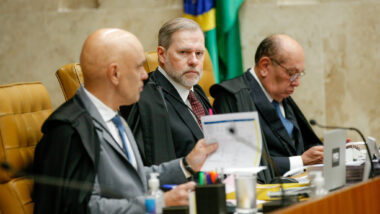
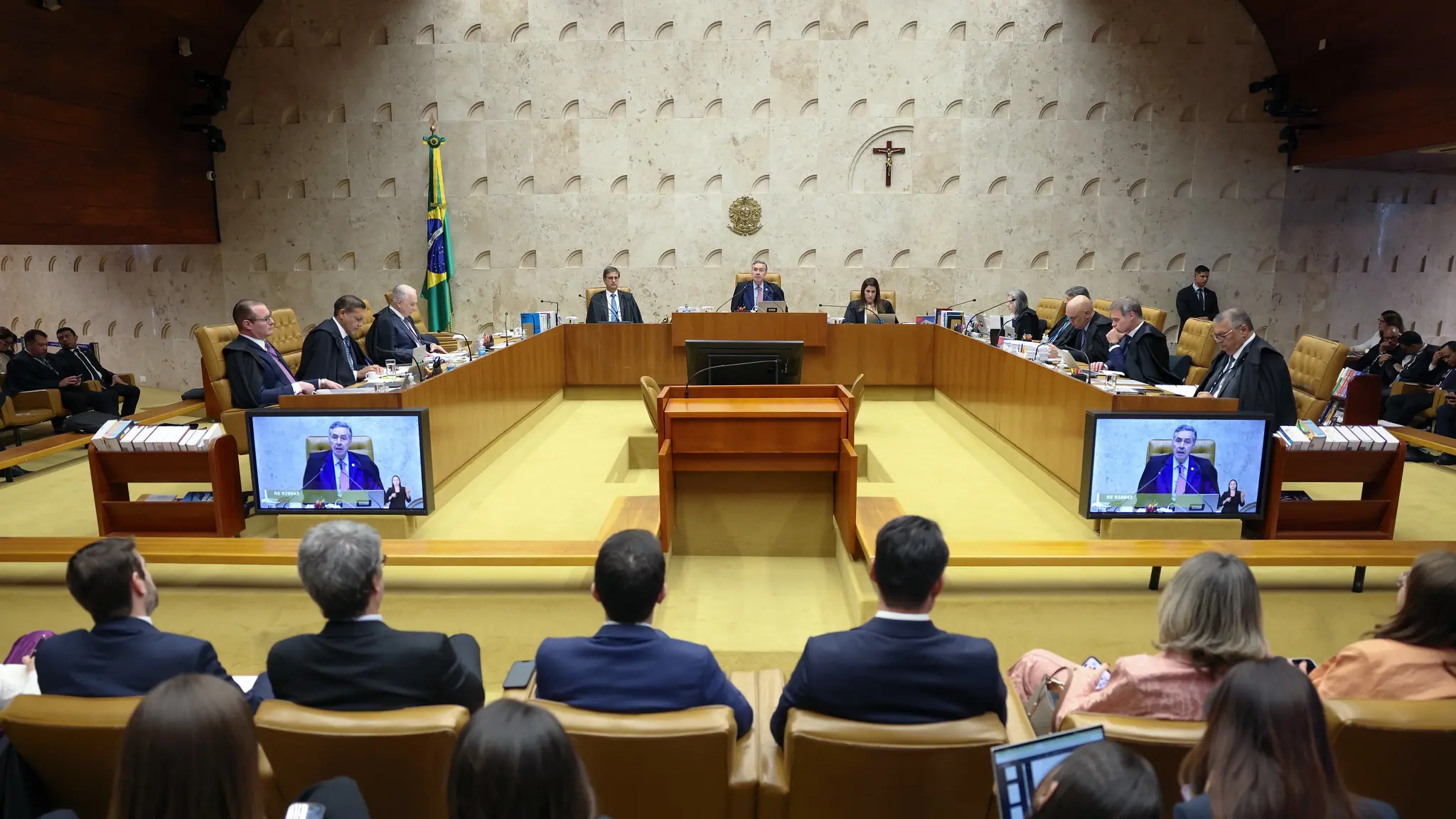
In September 2024, the Court's First Panel, formed by Moraes, Flávio Dino, Cristiano Zanin, Luiz Fux, and Cármen Lúcia, unanimously confirmed the monocratic decision that had suspended the social network X in Brazil for failing to comply with court orders to suspend user profiles. A similar decision was made regarding the video platform Rumble in March 2025.
In this report, we examine 10 key decisions by the STF and the Superior Electoral Court (TSE) that significantly contributed to Brazil's censorship environment over the last 6 years, documenting each justice's involvement. In many cases, there was tacit, informal support for Moraes's decisions. In this text, however, we only consider votes or concrete, formal acts that contributed to censorship or the criminal prosecution of right-wing politicians, activists, and influencers.
Alexandre de Moraes actively participated in all 10 of these measures. Cármen Lúcia participated in 8 such decisions. Luís Roberto Barroso acted in 6 of these decisions. Dias Toffoli, Edson Fachin, Cristiano Zanin, Flávio Dino, and Luiz Fux each participated in 5 decisions matching the conduct condemned by the US. Gilmar Mendes, in turn, acted in 4 of these cases. Kassio Nunes Marques participated in one such case, while André Mendonça participated in none.
Opening of the Fake News Inquiry
Inquiry 4781, which gave rise to the current censorship regime implemented by the STF, was initiated on March 14, 2019, by Dias Toffoli. When announcing the opening of the investigation – aimed at investigating "fraudulent news (fake news), malicious accusations, threats, and infractions imbued with animus calumniandi, diffamandi, and injuriandi, which undermine the honor and security of the STF, its members, and their families" – he also designated Alexandre de Moraes as rapporteur ex officio.
Since then, the fake news inquiry has targeted public officials, opinion leaders, journalists, parliamentarians, businesspeople, and citizens who dared to criticize, question, or insult STF justices. Popular expressions of disapproval toward the STF, both in the streets and on social media, began to be categorized as "attacks" on the institution, allegedly threatening the physical integrity and independence of the magistrates.
Over these six years, Moraes's handling of the inquiry has expanded the STF's power, and unorthodox practices—which had always been rejected in the Court's own jurisprudence for violating due process or infringing on defense rights—became commonplace. Unrelated cases with no clear connection began to be investigated by the justice, almost always in secret and through Federal Police delegates who report directly to him, often bypassing the Public Prosecutor's Office (PGR). This sidelined the PGR, which as the ultimate recipient of investigations, is the body responsible for analyzing facts, evidence, and suspicions to formulate criminal charges before the Court.
Validation of the Fake News Inquiry
A little over a year after the fake news inquiry was opened, the majority of the STF rejected a petition to dismiss the investigation, citing its irregularities: ex officio origin, lack of Public Prosecutor's Office involvement, sealed records without full access for defense attorneys, and an overly broad subject matter, in addition to persecutory and censorial acts.
At that time, the press had already been censored – Crusoé magazine was forced to pull a story on Toffoli's relationship with Odebrecht – and tax auditors were dismissed for inspecting the assets of justices' wives. Furthermore, a dozen parliamentarians, businesspeople, and influencers had already been subjected to breach of confidentiality orders and search and seizure warrants by order of Moraes.
Nevertheless, most justices deemed the inquiry constitutional. Alexandre de Moraes, Dias Toffoli, Edson Fachin, Luís Roberto Barroso, Gilmar Mendes, Cármen Lúcia, Luiz Fux, Celso de Mello, Ricardo Lewandowski, and Rosa Weber voted this way – the latter three have already retired. Only Marco Aurélio Mello dissented.
Anti-Democratic Acts and Digital Militias Inquiries
In April 2020, Alexandre de Moraes opened an investigation similar to the fake news inquiry: the inquiry into anti-democratic acts (INQ 4828). While the first initially focused on individuals defending Operation Car Wash (Lava Jato), Brazil's major anti-corruption investigation, who protested against its dismantling, the second concentrated on pro-Bolsonaro right-wing activism.
Unlike the fake news inquiry, the anti-democratic acts inquiry was also intended to address legal gaps or challenges raised by the first inquiry. It was opened at the request of the Public Prosecutor's Office (PGR) following a street demonstration in front of the Army Headquarters in Brasília, with Bolsonaro present, criticizing the STF's actions against the government.
In 2021, the PGR requested that the inquiry be dismissed, but Alexandre de Moraes subsequently opened another one ex officio: the digital militias inquiry (INQ 4874), aimed at investigating an alleged criminal organization composed of cells producing, financing, and disseminating "fraudulent news" against democratic institutions. Effectively, this inquiry extended the focus of the fake news inquiry to right-wing activists and influencers who criticized or insulted the STF on social media.
Daniel Silveira Arrested for Insulting Justices
During Carnival 2021, a video of Congressman Daniel Silveira went viral on social media. In the homemade selfie video, he vented his anger at the justices, hurling expletives at some and insinuating that others were corrupt. He also expressed a desire to see them beaten or humiliated, challenged the justices to arrest General Villas Boas, defended AI-5 (the executive order that became a symbol of Brazil's military dictatorship), and called for the impeachment of the justices.
Alexandre de Moraes immediately ordered his pre-trial detention. The following day, his colleagues unanimously endorsed the measure. Kassio Nunes Marques, Edson Fachin, Dias Toffoli, Cármen Lúcia, Gilmar Mendes, Luiz Fux, Rosa Weber, Ricardo Lewandowski, and Marco Aurélio Mello voted in favor – the latter three have since retired. The same justices later approved the indictment against him.
In April 2022, Daniel Silveira was sentenced to 8 years and 9 months in prison, though Kassio Nunes Marques and André Mendonça dissented – the former voted for acquittal, and the latter for a reduced sentence of 2 years and 4 months, to be served under a suspended sentence.
Prohibition of Accusations Against Voting Machines
In October 2021, the TSE established that the dissemination of unsubstantiated complaints on social media, alleging supposed fraud in electronic ballot boxes, should result in a politician's impeachment and ineligibility. On that occasion, the court condemned state deputy Fernando Francischini for stating, in a live Facebook broadcast at the end of election day in 2018, that some ballot boxes in Paraná prevented voters from confirming their vote for Bolsonaro.
The TSE considered that there was abuse of authority and improper use of social media. Justices Luis Felipe Salomão, Mauro Campbell, Sérgio Banhos, Edson Fachin, Alexandre de Moraes, and Luís Roberto Barroso voted this way.
“At issue, more than the future of a mandate, is the very future of elections and democracy,” Fachin said at the time.
“The improper use of a social communication vehicle for the dissemination of very serious fraudulent news, with serious repercussions on the electoral process and clear abuse of political power, was characterized,” said Moraes. “It is a very serious precedent that can compromise the entire electoral process if one falsely accuses fraud and accuses the Electoral Justice of being complicit in it,” Barroso justified.
Combating "Disinformation" at TSE
Based on the Francischini precedent, the TSE began assembling a social media surveillance apparatus, with the alleged objective of combating "disinformation," especially about electronic ballot boxes or the conduct of elections, that could compromise the normality of the elections. Norms were formulated and internal departments were created to track "attacks" on the Electoral Justice. Later, this same structure was used to block profiles and investigate users.
In 2021, under the rapporteurship of Edson Fachin, the TSE approved Resolution 23.671, which allowed the Electoral Justice to remove internet content with “knowingly untrue or severely decontextualized facts that affect the integrity of the electoral process,” especially those related to “voting, counting, and tabulation of votes.” The same provision stated that, after the material was removed from the air, “criminal liability, abuse of power, and improper use of social media” would be investigated.
In the same year, Luís Roberto Barroso created the Special Advisory for Combating Disinformation (AEED), an internal department for monitoring “defamatory campaigns” against the court. Under Alexandre de Moraes's management, starting in 2022, AEED began producing reports on right-wing politicians and influencers that would later be used to block their social media, always under the allegation of disinformation – not only about ballot boxes, but also about electoral opponents.
Before the second round of elections, Alexandre de Moraes approved a new resolution at the TSE, expanding his policing power over social media, authorizing him, ex officio, to suspend profiles or even a social network in case of non-compliance with his censorship orders. The rule was approved by Cármen Lúcia, Ricardo Lewandowski, Benedito Gonçalves, Raul Araújo, Sérgio Banhos, and Carlos Horbach.
At the same time, the TSE ordered prior censorship of a documentary by the production company Brasil Paralelo about the stabbing attack against Bolsonaro in 2018. “The return of censorship under any argument in Brazil cannot be allowed. But I see this as an extremely exceptional situation,” said Cármen Lúcia during the session. In addition to her, Alexandre de Moraes, Ricardo Lewandowski, and Benedito Gonçalves voted in favor of censorship.
In 2023, Moraes partnered with Anatel (telecommunications regulatory body in Brazil, similar to the Federal Communications Commission) for the immediate blocking of websites censored by the TSE. In 2024, Cármen Lúcia approved a new resolution increasing control over social media in elections. With the rule, platforms must adopt a “duty of care,” meaning they must act proactively and preventively to prevent the dissemination of content with “notoriously untrue or severely decontextualized facts.”
January 8, 2023 Proceedings
The depredation of the STF, Congress, and the Palácio do Planalto inaugurated an even harsher phase of repression against Bolsonaro's supporters. Under the command of Alexandre de Moraes, 1,628 criminal actions were filed, with 518 defendants who participated in the invasions being sentenced to up to 17 years in prison for crimes against the State; and 1,110 for less serious crimes, for demanding military intervention in front of the Army, who received lighter sentences, such as community service.
All were prohibited from using social media and will have to pay fines totaling R$ 30 million to repair the damages caused.
Initially, the trials were conducted by all 11 justices, but later they were moved to the First Panel, formed by 5. Alexandre de Moraes, Cármen Lúcia, Dias Toffoli, Gilmar Mendes, Luiz Fux, Edson Fachin, Cristiano Zanin, Flávio Dino, and Luís Roberto Barroso voted in favor of condemning the invaders for crimes against the State. Nunes Marques saw no crimes against democracy, and André Mendonça dismissed the crime of coup, in addition to defending the STF's lack of jurisdiction to judge the cases.
Investigations and Proceedings Against Bolsonaro
January 8 also boosted investigations against Jair Bolsonaro, all led by Alexandre de Moraes. The main was an accusation of attempted coup. In the First Panel, defined as the competent collegiate body, the indictment was received by Flávio Dino, Cristiano Zanin, Cármen Lúcia, and Luiz Fux – the latter made reservations, as he considered that the case should not proceed in the STF.
Fux also adopted a more moderate position when he voted against the restrictions imposed by Moraes and these same justices on Bolsonaro, such as the use of an electronic ankle monitor, the prohibition of communication with his son and federal deputy Eduardo Bolsonaro, and the use of social media.
The First Panel will still judge an appeal from the former president's defense against the house arrest, later decreed by Moraes.
X Suspension
On August 30, 2024, Alexandre de Moraes suspended X nationwide because the social network had not blocked investigated user profiles and withdrew legal representatives in the country, after the justice threatened to arrest its executives.
In addition to these measures, Moraes conditioned the return on the payment of fines totaling R$ 28.6 million. Brazilian bank accounts of X and also Starlink (another Elon Musk company) were blocked for the payment of fines.
Moraes ordered Apple and Google to remove the app from their virtual stores and imposed a fine of R$ 50,000 on individuals and companies that used VPN to access the social network.
The suspension was confirmed by Flávio Dino, Cristiano Zanin, Cármen Lúcia, and Luiz Fux in the First Panel – only the latter partially diverged, not to fine those who used VPN. X only returned online on October 8, after the company complied with Moraes's orders.
In March 2025, the First Panel unanimously endorsed Moraes's decision that suspended Rumble, after the company announced it would not comply with STF orders and would no longer appoint a legal representative in Brazil.
Social Media Regulation
In June, the STF issued the ruling that partially overturned Article 19 of the Civil Rights Framework for the Internet, which exempted social media from responsibility for user-posted content. The provision, inspired by American legislation, aimed to guarantee broad freedom of expression and promote innovation in the digital environment.
By a majority, the justices required platforms to proactively remove several forms of harmful content, but also those that can be classified as crimes against democracy, creating a loophole for arbitrary removals of political manifestations.
Alexandre de Moraes, Dias Toffoli, Luiz Fux, Flávio Dino, Cristiano Zanin, Cármen Lúcia, Gilmar Mendes, and Luís Roberto Barroso supported the change.