Ouça este conteúdo
(This is an English version of the text originally published by Gazeta do Povo on Saturday, August 23th, 2025)
“It’s a shame for one Power to take on the attribution of another.” “Without freedom, there is no independence.” “I have no doubt about an invasion of Brazilian Supreme Court at any moment today, in an act of desperation by Brazilians to regain their freedoms.”
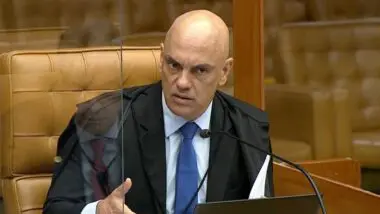
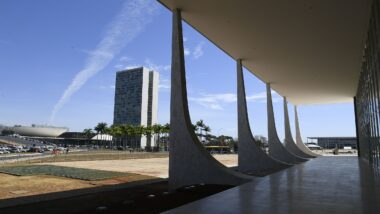
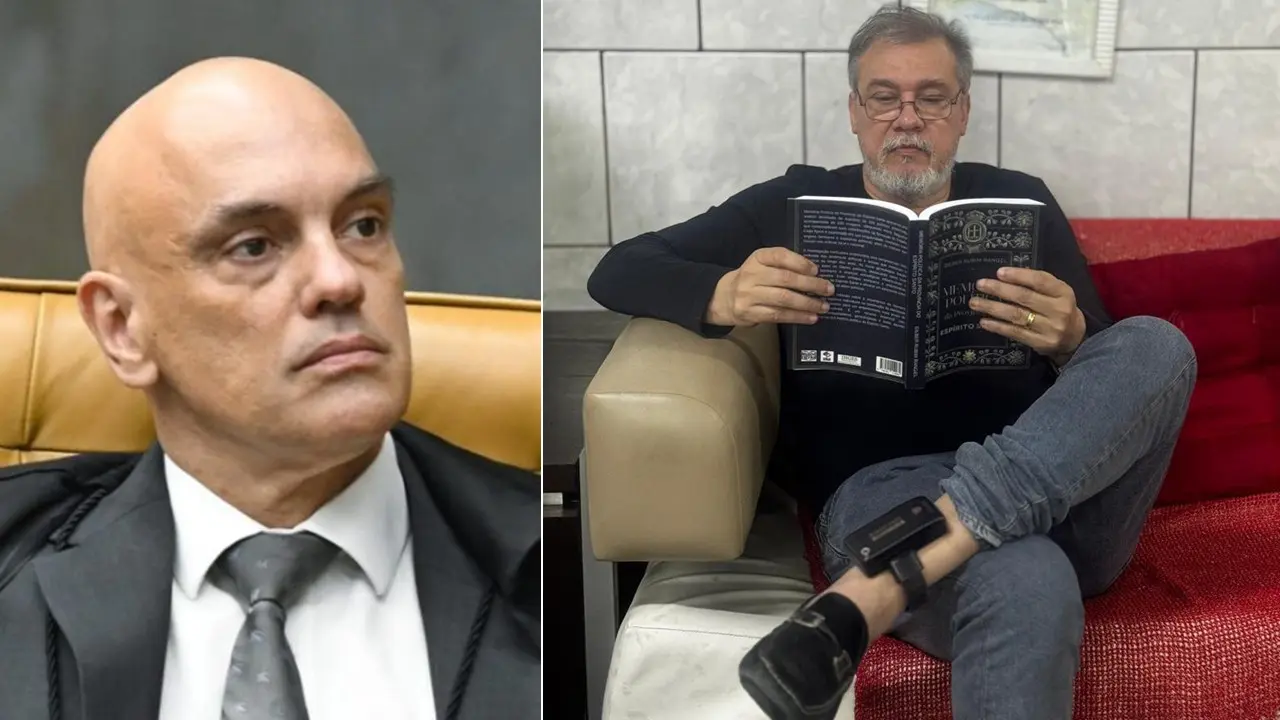
These were some social media posts that led journalist Jackson Rangel, now 62 years old, to spend 368 days imprisoned by order of Alexandre de Moraes, a Brazil’s Supreme Court (STF) justice. The journalist – who was never indicted by the Public Prosecutor's Office (PGR), but still wears an electronic ankle monitor – was mentioned by the Trump administration as one of the examples of judicial abuse used to sanction the justice.
“In one notable instance, de Moraes arbitrarily detained a journalist for over a year in retaliation for exercising freedom of expression,” stated the U.S. Treasury Department's communiqué, issued on July 30. “De Moraes has investigated, prosecuted, and suppressed those who have engaged in speech that is protected under the U.S. Constitution, repeatedly subjecting victims to long preventive detentions without bringing charges,” the text noted. Although his name is not mentioned, Jackson Rangel was the only journalist imprisoned during the period mentioned by the United States. He was incarcerated on December 15, 2022, under the argument of disseminating “fake news detrimental to the Democratic Rule of Law” and was granted provisional release more than a year later, on December 20, 2023.
Since then, Rangel has been subject to precautionary measures such as the use of an electronic ankle monitor and a ban on any travel outside the city of Cachoeiro de Itapemirim (ES), allowed to leave home only at night and on weekends.
“These measures severely impact his personal life and professional activities, preventing travel for investigations, interviews, and meetings with sources,” his defense has pointed out in a statement, emphasizing that “Federal Police reports, including the conclusive one, attest to the non-existence of evidence or indications of the alleged crimes, even after a six-year breach of confidentiality – possibly the longest in Supreme Court history,” it continues.
The defense also states that there is no formal indictment showing a crime committed by Jackson Rangel, and that the “prolonged procedural uncertainty and the maintenance of restrictions” violate the constitutional principles of due process, presumption of innocence, and proportionality.
Imprisoned without Indictment: Jackson Rangel's Case is Seen by Expert as “Absurd”
“I have never seen such a shocking case of someone who was unduly imprisoned,” stated lawyer and political commentator Fabiana Barroso in a video published in Gazeta do Povo in January 2024. Two days earlier, the situation had been disclosed for the first time.
According to the lawyer, the fact that Jackson Rangel is both a journalist and a lawyer made the facts even more troubling. “Without the free exercise of these two professions, we are already in a full dictatorship,” she said. “This kind of thing is not normal in any democracy,” added digital law expert Emerson Grigolette.
In his statement, the lawyer affirmed that the legal steps of a process were ignored in Jackson Rangel's case. “Everything was simply trampled over, destroyed in an absolutely absurd way,” he emphasized, pointing out that the journalist was punished and served a sentence “without even having been indicted,” and that the alleged crime of "disseminating fake news detrimental to the Democratic Rule of Law" would, at most, fall under a possible defamation complaint.
However, Rangel was the target of an arrest warrant and other precautionary measures, saw 20 computers from his newspaper in Espírito Santo seized, and had all his social media accounts blocked. “I was subjected to a regime of torture incompatible with the Constitution and international human rights treaties,” he lamented in an interview with Gazeta do Povo in 2024. “I was a victim, indeed, of anti-democratic acts that violated the due process, the constitutional order, and all civilized values you can think of,” he continued.
Thesis against the Journalist was Presented to the STF Illegitimately
In the confidential decision presented by Moraes, to which the report had access, the justice used a thesis from the Attorney General's Office of the State of Espírito Santo (PGE-ES) according to which the journalist was the author of “virulent posts” against the Supreme Court on his X profile (at the time, Twitter).
“The requests were formulated by the PGE-ES, which lacks legitimacy to file a petition at the Supreme Federal Court (STF),” explained former federal prosecutor Deltan Dallagnol. According to him, the petition should have been immediately dismissed by the STF and archived.
Dallagnol also pointed out that the journalist does not have privileged jurisdiction to be judged directly by the Supreme Court, and that he was arrested under the argument of an alleged crime that does not even exist in the Brazilian Penal Code, that of “fake news.”
The former prosecutor further emphasized that the phrases cited by the journalist were mere criticisms of the Supreme Court, and that he himself would have made stronger and more incisive comments. “This is part of the regular exercise of the right to freedom of expression and the press,” he stated, noting that even so, Jackson Rangel was imprisoned without having commited a crime, and held in jail 11 months longer than the maximum period allowed for regular preventive detention.
According to the defense of the journalist, the PGR refused to proceed with the case at the time because it saw no crime and issued several opinions for the archiving of the process. “The PGR also appealed against the arrests and other measures, but the internal appeal was not brought to the plenary by the reporting justice [Alexandre de Moraes],” it informed in a note.
“This is a violation of the accusatory principle. But what did Moraes do? He ignored it and kept the person imprisoned, without an indictment,” Dallagnol pointed out.
Who is Jackson Rangel?
A resident of Cachoeiro de Itapemirim, in the Brazilian state of Espírito Santo, Rangel has worked as a journalist for 42 years. To Gazeta do Povo, he reported that he has always acted independently, monitoring and disclosing “facts inconvenient to the powerful of the moment” and that, because of this, he had already been targeted by judicial processes in actions by individuals who felt harmed by citations in his reports.
“That’s normal,” he said. “What’s abnormal is arresting journalists to silence and disable them, something not seen since the military dictatorship [1964-1985],” he added in an interview given last year.